
From McCarran Field to Harry Reid International
Las Vegas’s main airport opened at its current site in 1948 as McCarran Field, named after Nevada senator Pat McCarran. It grew with the city: as casinos and convention halls multiplied, the airport added terminals, crossing runways and, in 2012, the international Terminal 3. In 2021 it was renamed after Senator Harry Reid. Today it is one of the busiest airports in the United States by passengers, almost all of them travelling for leisure or conventions.
What makes the Las Vegas cams special
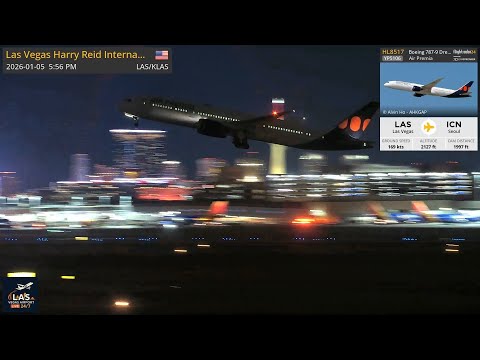
The airport sits right at the southern end of the Strip, so the cameras capture something no other stream offers: aircraft framed by the Luxor pyramid, the Mandalay Bay towers and the lights of the Strip. Southwest Airlines dominates the schedule, but you’ll also see low-cost carriers, flights from Mexico and Canada, long-haul jets from Europe and Asia, and a huge number of private jets, especially during CES in January, Formula 1 race weekends and big fights.
Runways and the typical flow
LAS has two pairs of parallel runways that cross each other: 01/19 and 08/26. In the most common configuration, departures use 26L and 26R heading west towards the mountains, while arrivals land on 19L and 19R or 26L/26R. In strong north winds the flow switches. The high elevation and desert heat mean heavier jets need long takeoff rolls in summer.
Best times to watch
- Thursday and Friday afternoons: arrival waves for weekend visitors.
- Sunday and Monday: busy departure banks heading home.
- After sunset: the Strip lights make the most photogenic streams of the day.


